Data spotlight · February 2025
The Impact of the January 2025 Wildfires on Los Angeles' Unhoused Community
Introduction
In January 2025, a series of devastating wind events and wildfires swept through Los Angeles County, leaving widespread destruction and loss of life. Unhoused individuals are often overlooked in disaster response, yet they face heightened risks due to prolonged exposure to hazardous conditions, socioeconomic and medical vulnerabilities, and limited access to care. Drawing on survey data from PATHS, this report provides a snapshot of the immediate effects of the January 2025 wildfires on a representative sample of unhoused Angelenos.
- Reported at least one form of harm or disruption
- 70%Reported at least one form of harm or disruption
- Felt their lives were in danger
- 51%Felt their lives were in danger
- Reported damage to their living space
- 42%Reported damage to their living space
- Reported being injured
- 20%Reported being injured
PATHS monthly survey, January 2025 · n = 412
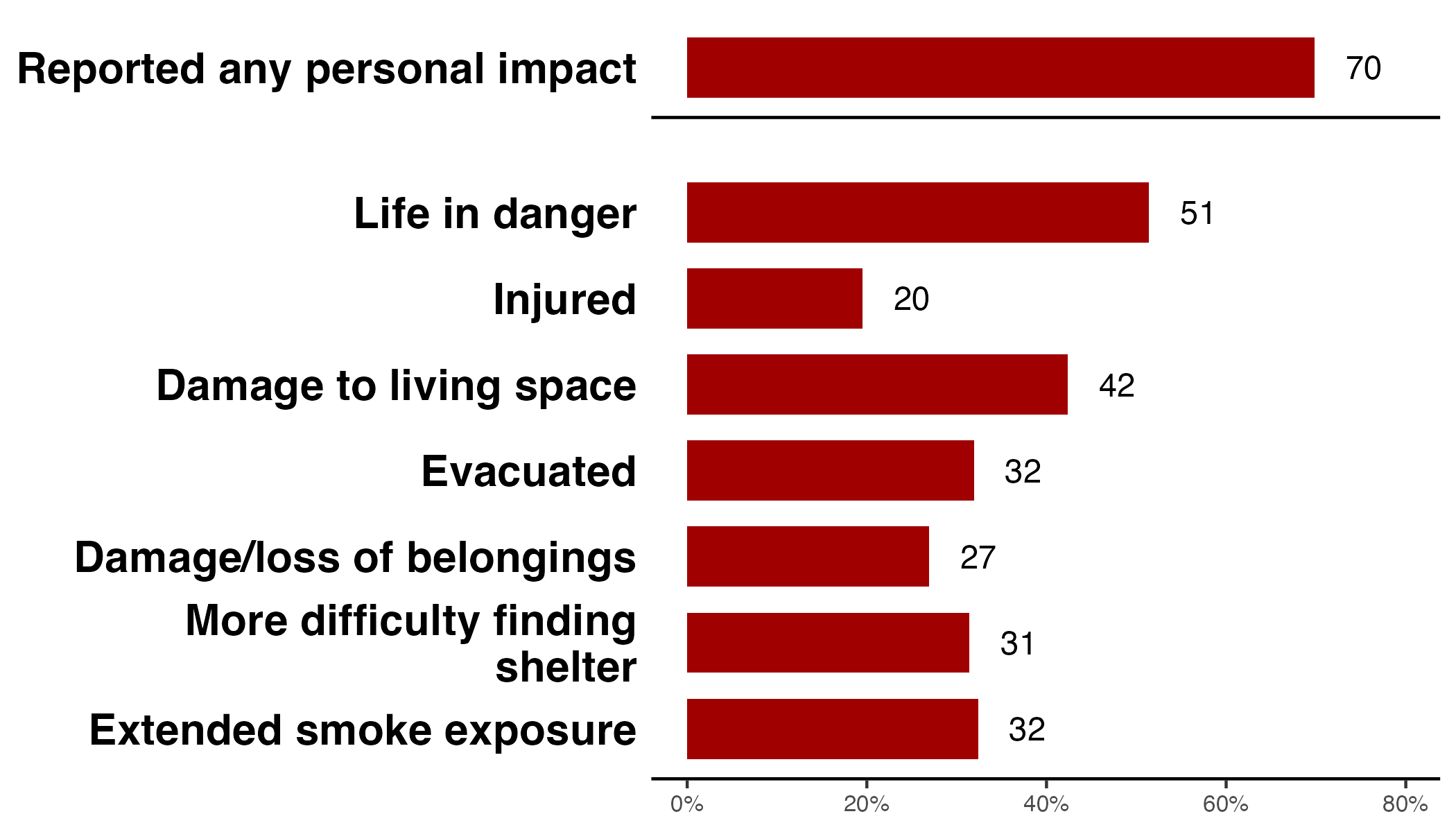
Seventy percent of respondents reported experiencing at least one form of harm or disruption. Just over half (51%) said they felt their lives were in danger, and nearly 42% reported damage to their living space. Around a third reported being forced to walk through smoke for extended periods (35%), to evacuate (32%), or to navigate greater difficulty finding shelter (31%). One in five (20%) reported being injured.
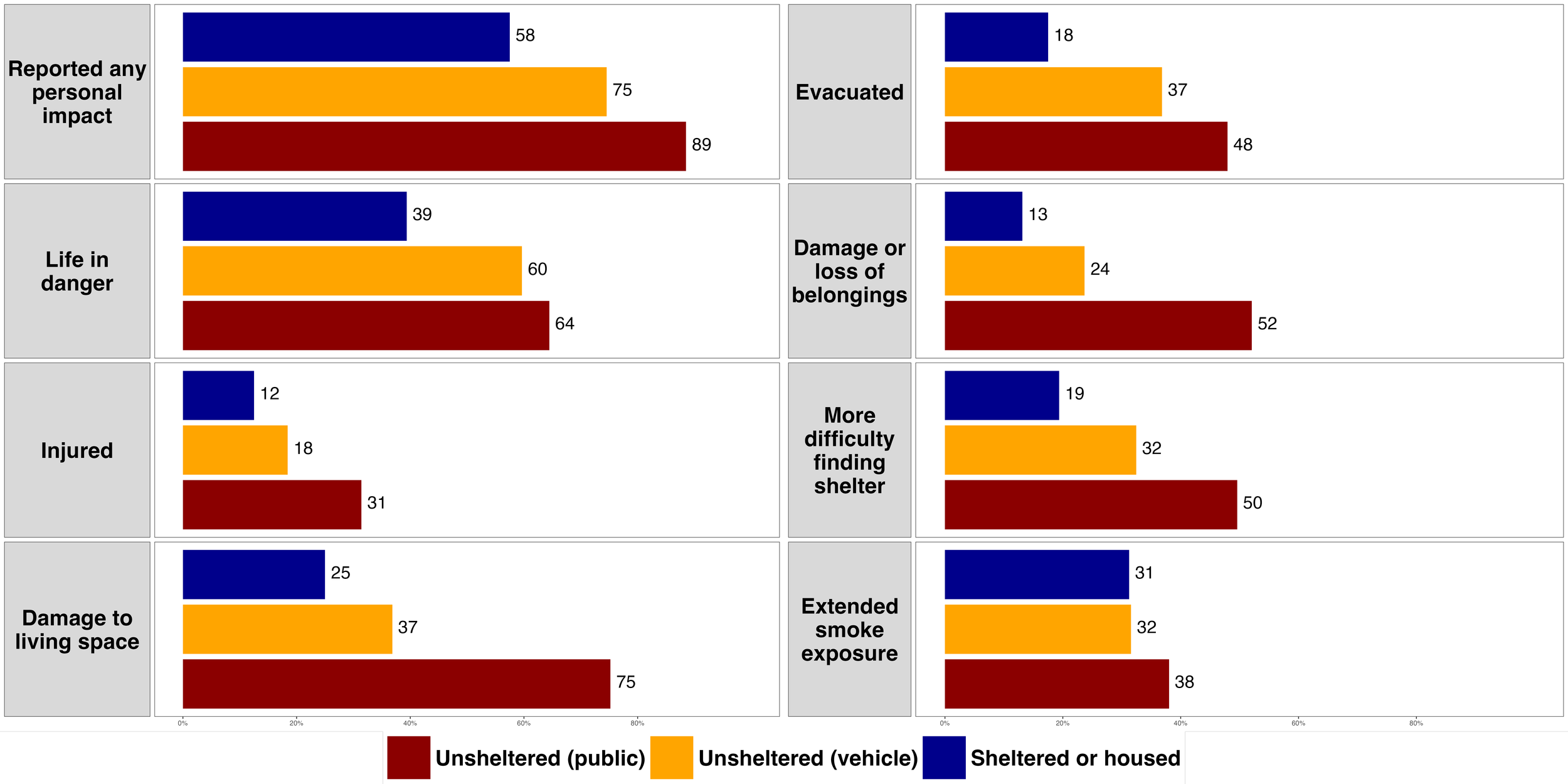
When broken down by housing status, unsheltered individuals, both those living in public space and in vehicles, were consistently the most at risk. Unsheltered individuals, particularly those living outdoors, reported significantly higher levels of danger, injury, displacement, and loss compared to their sheltered counterparts.
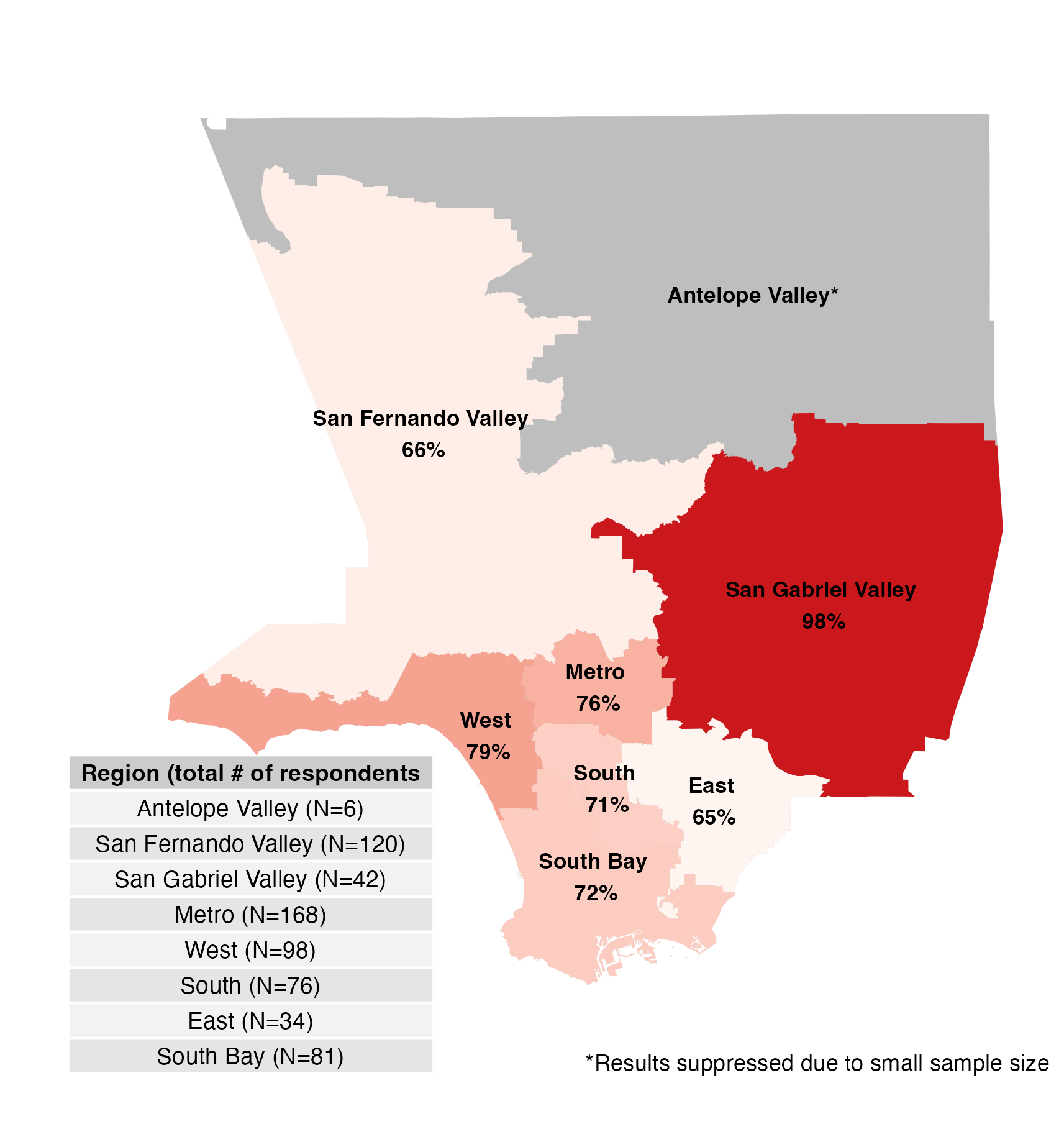
The prevalence of self-reported wildfire impacts was highest among respondents in the San Gabriel Valley and West LA, where the largest fires, the Eaton and Palisades Fires, were concentrated, reflecting the heightened risks faced by those living closer to active burn areas and smoke plumes. Differences across regions may also reflect local resource availability, such as shelter beds, emergency alerts, and health services, which can buffer or exacerbate risks. However, results should be interpreted with caution given variation in sample sizes across regions.
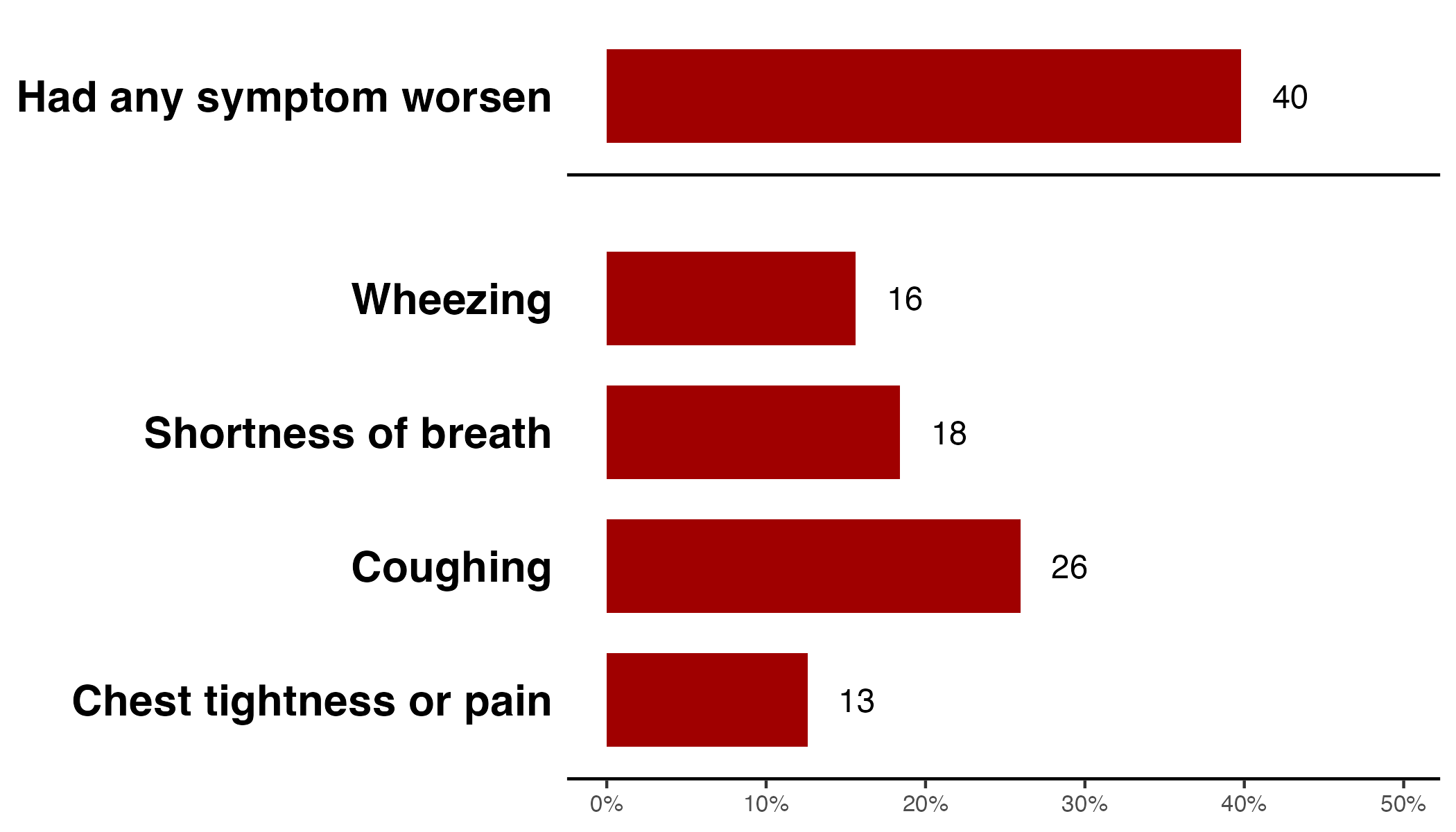
The smoke generated by the January wildfires also took a toll on the respiratory health of unhoused Angelenos. In the February biannual survey, 43% of respondents reported a worsening of respiratory symptoms in the weeks following the fires. Coughing was the most common complaint (26%), followed by shortness of breath, wheezing, and chest tightness or pain.
Conclusion
These findings highlight the acute vulnerability of unhoused individuals during extreme weather and wildfire disasters. Many participants faced life-threatening danger, injury, and displacement, while others experienced direct harm to their living spaces, belongings, and health. Respiratory impacts from wildfire smoke were also widespread, compounding existing health risks for this already at-risk population. Ultimately, the results underscore the urgent need for disaster planning and response strategies that explicitly address the distinct threats faced by unhoused populations. Strengthening preparedness through evacuation planning, emergency shelter capacity, mobile health services, and reliable access to basic needs can help reduce preventable harms in future disasters.