Introduction
The recent wave of immigration enforcement raids sweeping across Los Angeles has severely undermined the safety and well-being of communities of color and other marginalized groups. Among those most vulnerable are our unhoused neighbors, who face intersecting and heightened risks. New data from PATHS shows that unhoused individuals, already subjected to pervasive surveillance, criminalization, and systemic neglect, are experiencing added layers of fear and instability as a direct result of aggressive immigration enforcement tactics and related political activities.
- Reported some impact on their personal well-being
- 34%Reported some impact on their personal well-being
- Said their life was in danger
- 14%Said their life was in danger
- Faced increased difficulty finding shelter
- 13%Faced increased difficulty finding shelter
- Were forced to move
- 10%Were forced to move
PATHS monthly survey, June 2025 · n = 722
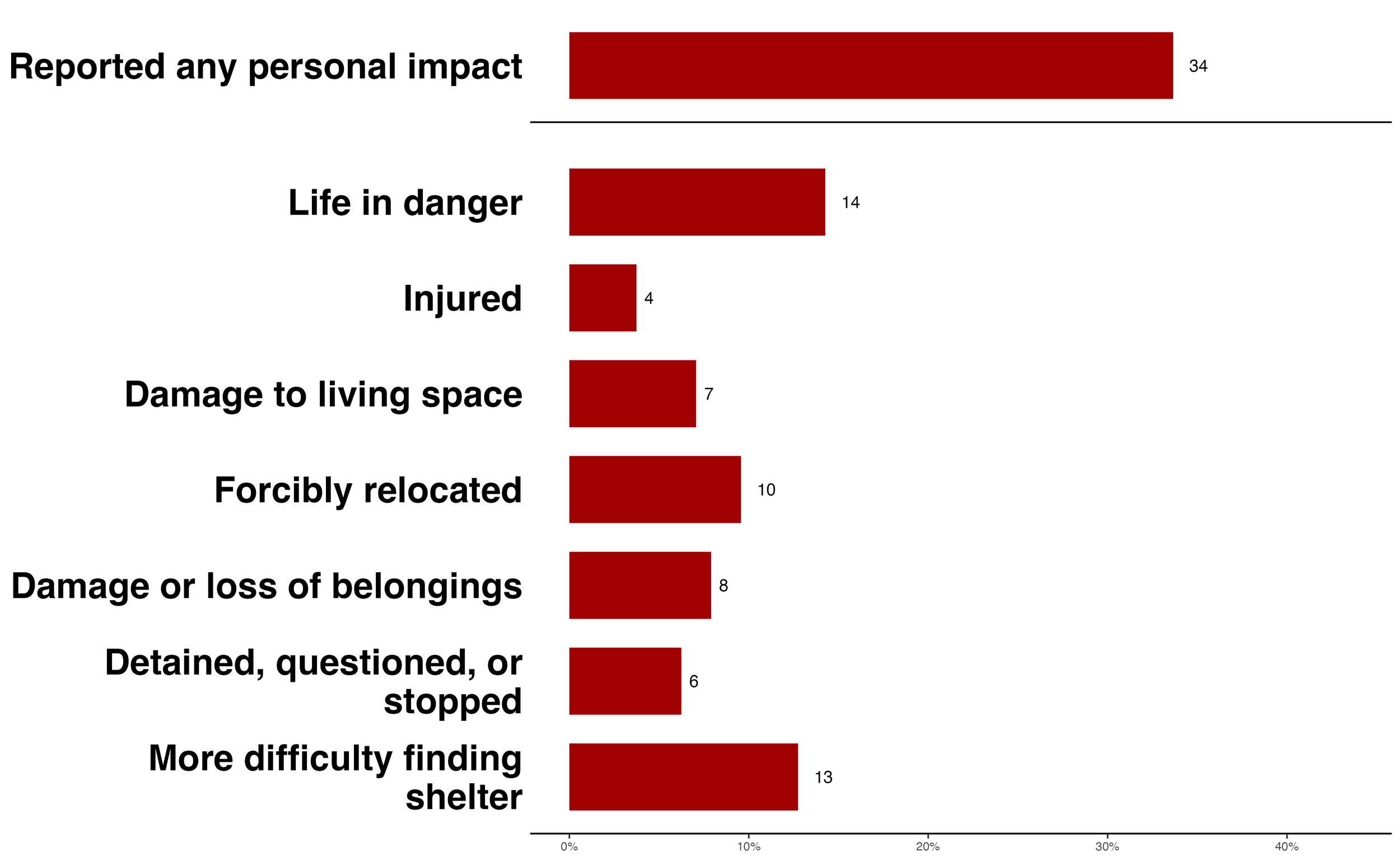
A third (34%) of respondents reported some form of impact on their personal well-being. Most notably, 14% said their life was in danger, 10% were forced to move, and 13% faced increased difficulty finding shelter.
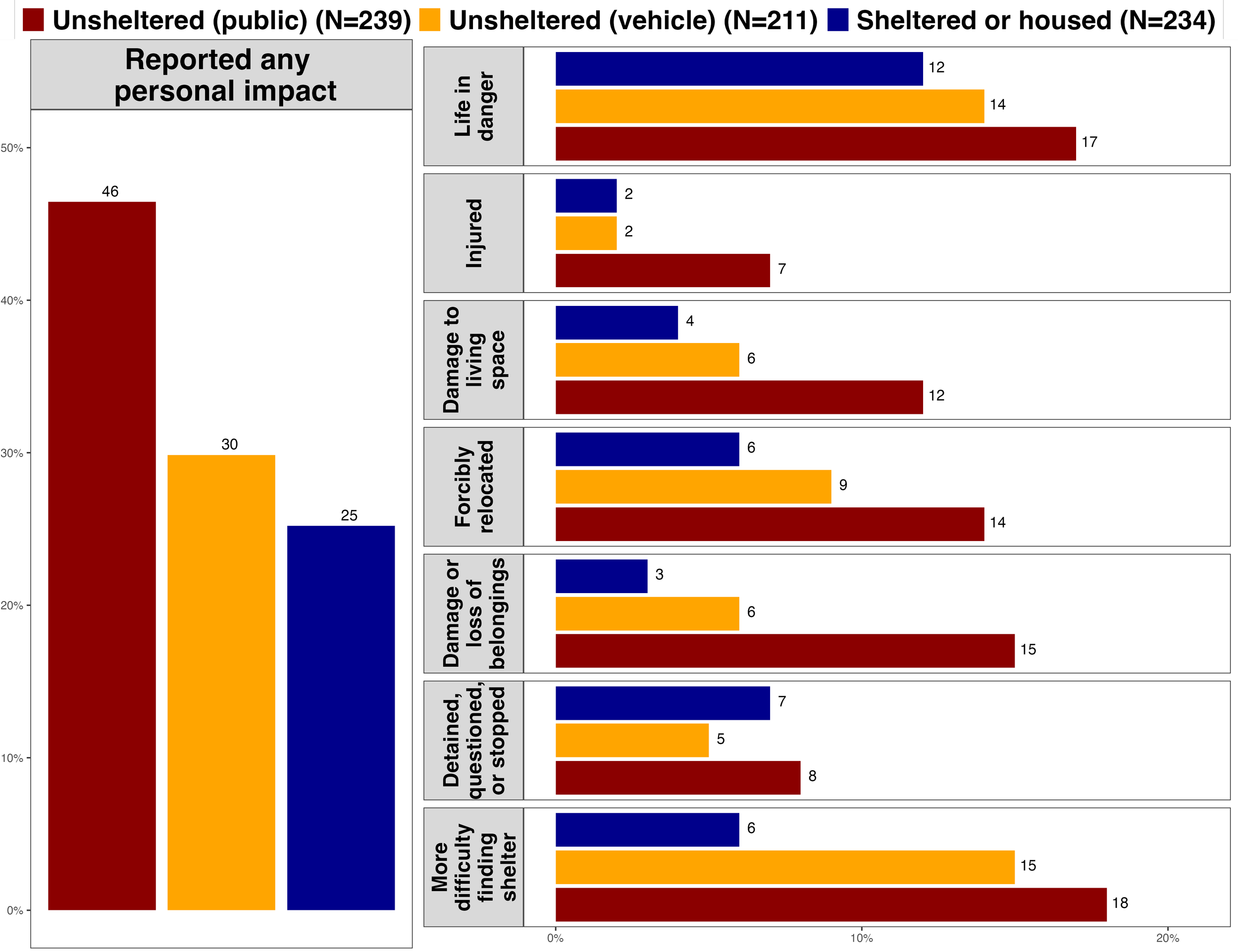
Publicly unsheltered individuals consistently experienced the most harm across all categories. Overall, publicly unsheltered respondents were nearly twice as likely to report any harm (46%) as those sleeping indoors (25%). Vehicle dwellers experienced moderately elevated risks (30% overall), primarily due to difficulty in finding shelter (15%).
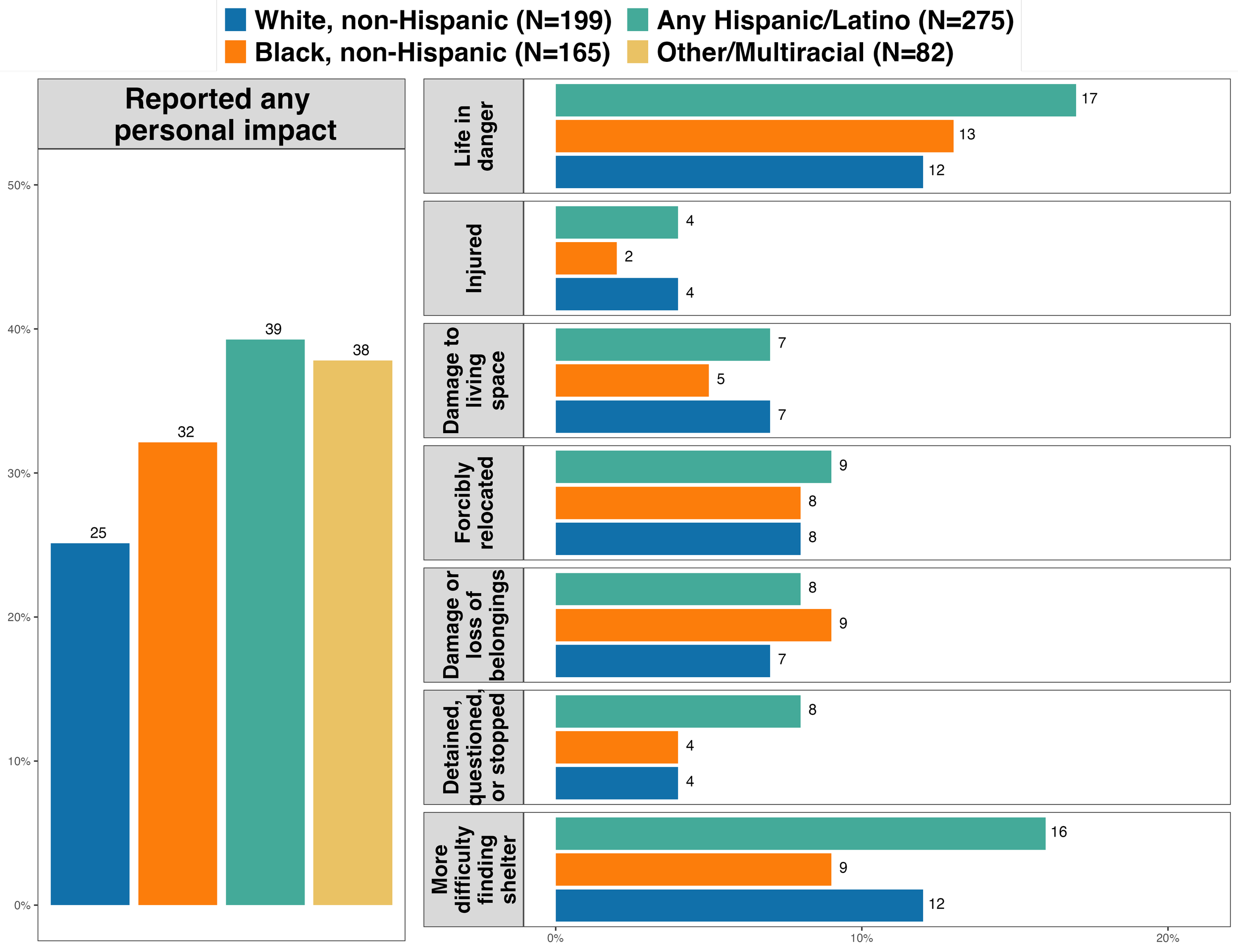
Rates of impact were high across all race/ethnic groups, but notable disparities were observed. Latino/Hispanic respondents reported the highest rates of overall impact (39%).
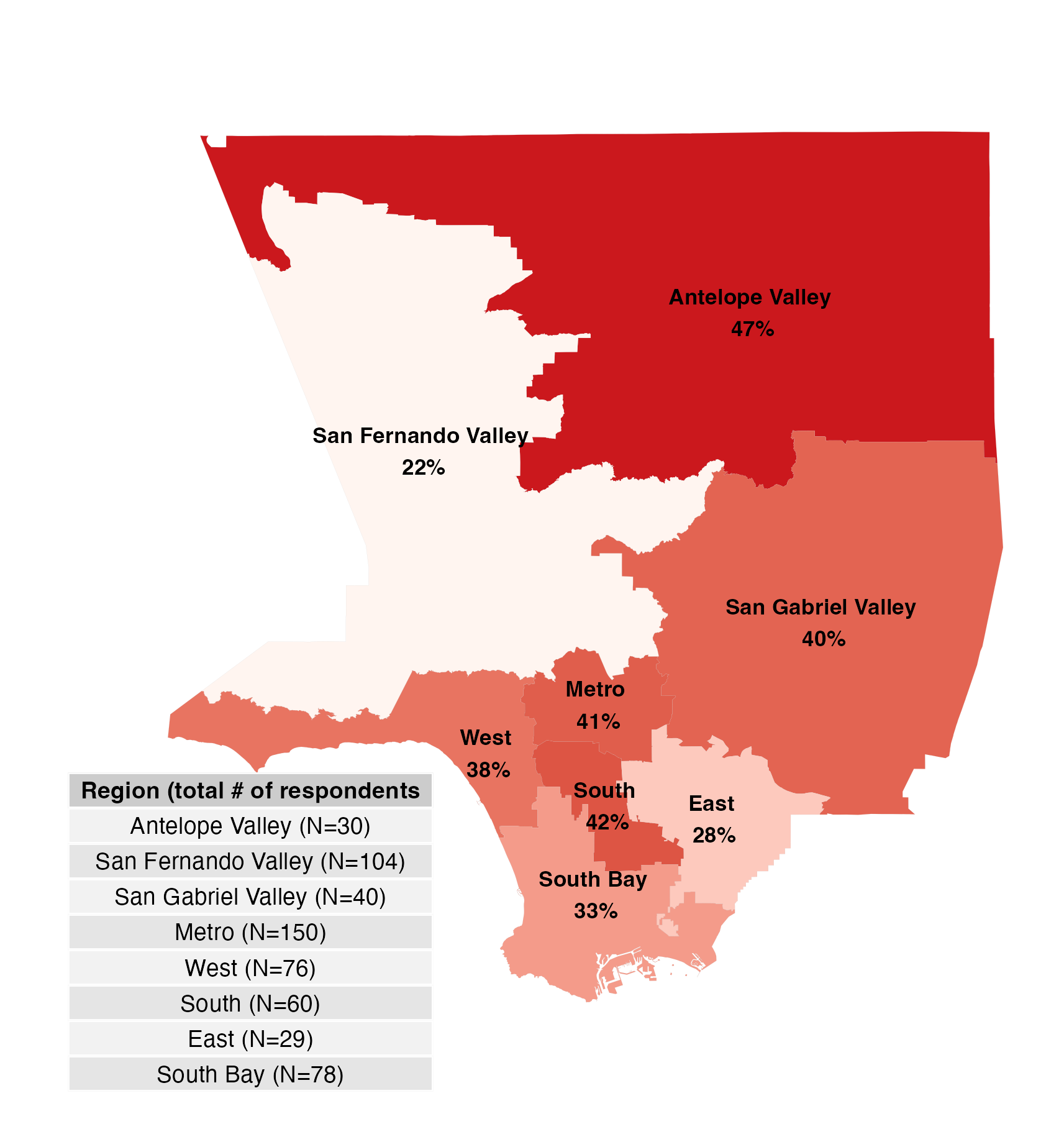
Geographically, impacts were unevenly distributed across the public health Service Planning Areas (SPAs) of LA County, reflecting variations in enforcement activity, demographic and immigration status concentrations, and the presence of large-scale protests and curfews.
Conclusion
These findings highlight the compounding vulnerability of the unhoused during moments of state enforcement and civil unrest. Those without shelter, from communities of color, or living in enforcement hotspots experienced increased threats to their safety and livelihood. These early insights highlight an urgent need for public officials, policymakers, and service providers to proactively address the layered risks facing unhoused populations during times of aggressive enforcement activity.